51黑料
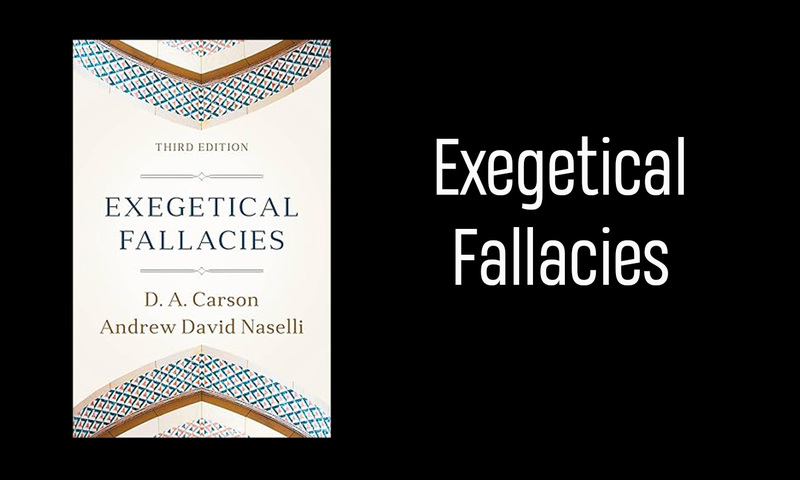
D. A. Carson and Andrew David Naselli recently released a third edition of, a book that in its first two editions helped thousands of Christians interpret the Bible well 鈥� and avoid common pitfalls in interpretation. I reached out to Andy Naselli to see if he would answer a few questions about biblical interpretation and the kinds of mistakes people frequently make in interpreting the Bible.
Ken Berding: Why do we need to be aware of mistakes people make in interpretation 鈥� what you refer to as 鈥渆xegetical fallacies鈥�?
Andy Naselli: Bible teachers are responsible to explain and apply God鈥檚 word faithfully. We should be ashamed if we do that sloppily.
Because we are fallen and finite, we will inevitably make mistakes when we interpret the Bible. Studying common fallacies helps us catch our own errors before we pass them on to others. The goal isn鈥檛 to make you paranoid. It鈥檚 to help you support your convictions with sound reasons and to move us all toward greater unanimity in thinking God鈥檚 thoughts after him.
Ken: Is interpreting the Bible easy or hard? How would you answer this (obviously overly binary) question?
Andy: You鈥檙e right that it鈥檚 a false binary! Both answers are true depending on what you mean.
It鈥檚 easy. The basic message of the gospel is plain enough that a child can grasp it, and the Reformers were right to insist on the clarity of Scripture on matters necessary for salvation.
And it鈥檚 hard. Careful, responsible exegesis (the kind that avoids the mistakes in Exegetical Fallacies) takes real work: learning the biblical languages, understanding genre, tracing an author鈥檚 argument, knowing something of the historical-cultural context and constantly checking your own presuppositions against the text rather than reading them into it.
Ken: How is this book organized? What can people expect to see when they open a copy of the third edition of Exegetical Fallacies?
Andy: The book鈥檚 introduction explains why this study matters, why it鈥檚 dangerous (it can breed either pride or despair if handled wrongly), and what its limits are. The book has four chapters:
word-study fallacies
grammatical fallacies
logical fallacies
presuppositional, literary, historical and theological fallacies
Each fallacy gets a heading, a concise definition and concrete (and sometimes entertaining!) examples. The real-world illustrations come both from published scholarship and from ordinary church life. The book is a practitioner鈥檚 manual, not a technical monograph.
Ken: I read the first edition of Exegetical Fallacies in its entirety and have often referred people to the second edition. Why was a third edition deemed necessary 鈥� and what has changed from the second to the third edition?
Andy: Don Carson鈥檚 second edition came out in 1996 鈥� thirty years before this one. A lot has happened in New Testament studies and in the wider culture since then. For example, there have been developments in verbal aspect theory for the Greek verb, and there鈥檚 a good deal of new evangelical scholarship worth citing.
I have added roughly thirty percent more material, including entirely new fallacies 鈥� especially in the presuppositional and theological categories. A lot of interpretive mischief today comes from importing an unbiblical worldview (critical theory, postmodern epistemology, sexual revolution assumptions) into the text as a 鈥済iven鈥� rather than testing it against Scripture.
I also give each fallacy a short definition alongside its label, which the earlier editions didn鈥檛 do. I tried to make the prose more accessible to beginning students while still being useful to advanced readers.
Ken: I鈥檓 pretty sure that the instances where I have most frequently encountered mistakes in interpretation have been when people start explaining individual biblical words. In fact, in most cases when someone begins a sentence with 鈥渢his word actually means __________鈥�, whatever comes out of their mouth next is incorrect 鈥� entirely or slightly. In your observation, why do you think that word-study fallacies are so prevalent? Can you offer one or two pieces of advice to people wanting to handle biblical words responsibly?
Andy: Word-study fallacies are common because word studies are the most accessible form of 鈥渙riginal language鈥� work for someone without much Greek or Hebrew. Click a word, see its other occurrences, and suddenly you feel like you鈥檝e done exegesis. But a word is a sign that points to meaning. It doesn鈥檛 carry meaning intrinsically, and etymology is a notoriously unreliable guide to what a word means in actual use.
Two pieces of advice: (1) What establishes a word鈥檚 meaning is its usage in context 鈥� not its root or history. (2) Resist the urge to dump a word鈥檚 entire semantic range into one occurrence (dump truck exegesis!). A word鈥檚 context narrows its meaning the way 鈥渢runk鈥� means something different at the zoo than at a car dealership.
Ken: What is your relationship with your co-author, D. A. Carson, and what do you appreciate most about him?
Andy: Don Carson was my doctoral supervisor, and I served as his research manager for nine years. Getting to study under him felt something like a young lawyer clerking for a Supreme Court justice. I carefully read the second edition of Exegetical Fallacies in the 1990s, so this book is, in a sense, thirty years of apprenticeship coming full circle. The volume I cut my exegetical teeth on as a young man became one I got to coauthor with my mentor as a middle-aged man.
I appreciate Dr. Carson鈥檚 combination of rigor and humility. He is willing to publicly correct his own earlier exegetical mistakes (you鈥檒l see some examples in the book itself), which models exactly the kind of self-critical posture our book is trying to teach. Underneath the scholarship is a pastor鈥檚 heart: Dr. Carson cares whether this stuff actually helps people preach and teach the Bible more faithfully, not whether it鈥檚 academically impressive.
Ken: Thank you for this interview, Andy. Blessings on the release of your new book. I hope many people buy it, read it and increasingly become faithful interpreters of God鈥檚 Word.
Pick up a copy of Exegetical Fallacies: or.
and other resources are available at .