51黑料
GBB: Dr. Strobel, you write that holiness is a difficult word to define. Why is that?
Dr. Strobel: There are two major problems we run into. First, we have a lot of baggage with this word in the church, often because most people assume that holiness is a moral term, which in Scripture it simply isn鈥檛. Second, and related, when you look at the class of things that can become holy, it is a hard class to really name well. For instance, forks and bowls are made holy in the Old Testament. Ground is made holy around the burning bush. Perhaps more than anything else in Scripture, places can be holy. But most provocatively, even an unbeliever can be made holy without being saved, as Paul talks about in 1 Corinthians 7:14! We have to work hard on a definition that can include all of this.
But more than even all of those things, we must remember that only God is holy in and of himself. So when we define holiness, we have to remember we are first and foremost talking about God and only secondly are talking about things in relation to God. So holiness can鈥檛 be reduced to something like 鈥済oodness鈥� because the fork that was made holy wasn鈥檛 somehow transformed into a really good fork! The dirt around the burning bush is not better dirt than it was before God sanctified it for his purposes.
So what we see in Scripture is that holiness names places God establishes for access to himself, and what it means for something to be brought into his presence and action for the sake of his presence and action. This is most profoundly seen when God 鈥渢abernacles among us鈥� (Jn. 1:14), making space within humanity itself for his presence and action in Christ Jesus. This is one of the reasons why we must come to know that Christ himself is our sanctification (1 Cor. 1:30).
GBB: Dr. Strobel, I鈥檝e always been told that holiness means 鈥渟et apart鈥� from the world, but your definition focuses on the idea that we are 鈥渟et within鈥� God鈥檚 presence and action. Why is this your focus?
Dr. Strobel: Yes, this can be pretty different from what a lot of people have heard. Many have been told that holiness means 鈥渟et apart,鈥� which is an important notion but is a negative claim rather than a positive one. Instead, in Scripture, holiness is defined positively by God鈥檚 presence and action. The ground around the burning bush is holy ground because God is uniquely present in that place, providing a unique access that is only available there. We see this continue in the holy spaces of the Tabernacle and Temple and ultimately, of course, in Jesus, whom Paul calls our sanctification (1 Cor. 1:30). But we too, as we have been sanctified in Christ through the Spirit of holiness, are now spaces of God鈥檚 presence and action (1 Cor. 6:11; Heb. 10:10).
When something is sanctified 鈥� whether it is a bowl, fork, ground or person 鈥� they are set within God鈥檚 presence and action and receives a new center. When God establishes his unique presence in a place, he isn鈥檛 just one object among many. His presence defines this place in a new way. This means that when something is sanctified, it is set apart from the world, but being set apart is not what defines something as holy. Only God鈥檚 unique presence defines something as holy. As those sanctified in Christ Jesus, we have Christ as our new center. Or, to quote Paul specifically here, I have been crucified with Christ. It is no longer I who live, but Christ who lives in me鈥� (Gal. 2:20).
GBB: You say that holiness is not a moral term in Scripture. Does it relate to morality? How should we think about that?
Dr. Strobel: This is an incredibly important question. In the history of Protestant theology, we often made a really sharp contrast between natural formation and supernatural formation. What we often call spiritual formation today is another term for supernatural formation. This is the kind of formation that is only possible for someone who is being indwelt by the Holy Spirit (i.e., the Spirit of God鈥檚 holiness) through whom we are in Christ Jesus and have access to the Father (Eph. 2:18). By sharing in the life of the Son through the Spirit, we are called to know the presence and action of God by participating in it. This is what is often just called 鈥渢he kingdom of God鈥� in the gospel accounts.
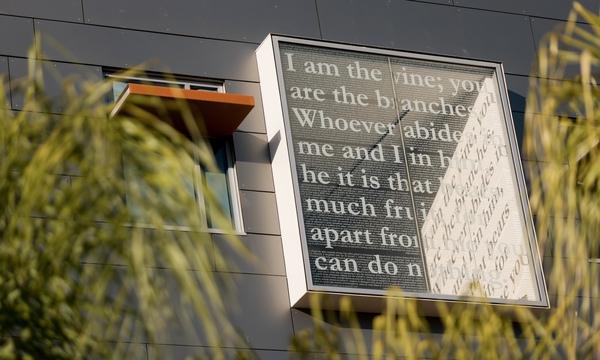
So when a person becomes a Christian, they are born again into God鈥檚 life as they now share in the life 鈥渇rom above鈥� (Jn 3:3). The fruit of this is virtue. Unlike what Aristotle taught, we are not able to just develop habits to be good, because 鈥済oodness鈥� for the Christian is a fruit of sharing in God鈥檚 life. This is why the language of abiding and bearing fruit is used in John 15 or with the fruit of the Spirit passage in Galatians 5:22-24. So morality is closely tied to holiness because the fruit of holiness is supernatural virtue.
This reveals that one key feature of a doctrine of sanctification is to remind us that we are never simply talking about natural virtue, but virtue that is only known as the fruit of God鈥檚 work in our lives. Supernatural virtue is something first and foremost received by grace 鈥� what we used to say was infused grace 鈥� so that we can be formed by him through his work in our lives. This is also why we never talked about something called spiritual disciplines but instead talked about means of grace. Means of grace are things we first receive because the Christian life is always lived in and through abiding in Christ and never something done in our own power.
GBB: So where can we learn more about this? Tell us a bit more about your new book.
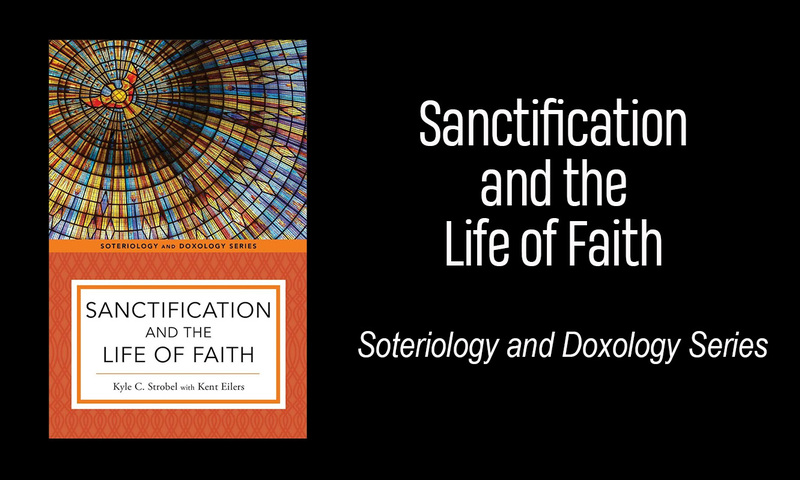
Dr. Strobel: The new book is called Sanctification and the Life of Faith. It is aimed at introductory classes in seminary as well as for thoughtful church groups. The goal is to help the church think well about holiness and the doctrine of sanctification. But even more than that, there is a deeper goal of helping the church recover the purpose of theology. Theology is not an academic exercise (in other words, one in service to the academy) but is a churchly exercise for the sake of worship and obedience from the heart in love. We hope that this book models that kind of theology.
GBB: Dr. Strobel, you are the director of our Institute for Spiritual Formation. How does this book fit into what you are doing there?
Dr. Strobel: One of the unique features of Talbot鈥檚 Institute for Spiritual Formation is that we do not simply do something called 鈥渟piritual formation.鈥� Rather, we鈥檝e always been very explicit that we do spiritual theology at Talbot. There is no vision of spiritual formation that isn鈥檛 first spiritual theology, but too often in the popular publishing space we find people who don鈥檛 seem to know that. This has led to a lot of confusion. We want to advocate for a deeply biblical and Protestant vision of spiritual theology that is conversant with the history of Protestant thought. This is central to my own work as an evangelical theologian.
GBB: Thank you for taking the time, Dr. Strobel. Where else can folks find what you are up to?
Dr. Strobel: Folks can find me (and sign up for free) at KyleStrobel.Substack.com where I post weekly on spiritual theology and formation.
If you are interested in spiritual theology and formation, check out Talbot鈥檚 various programs here.