Bachelor of Science in Engineering
Overview
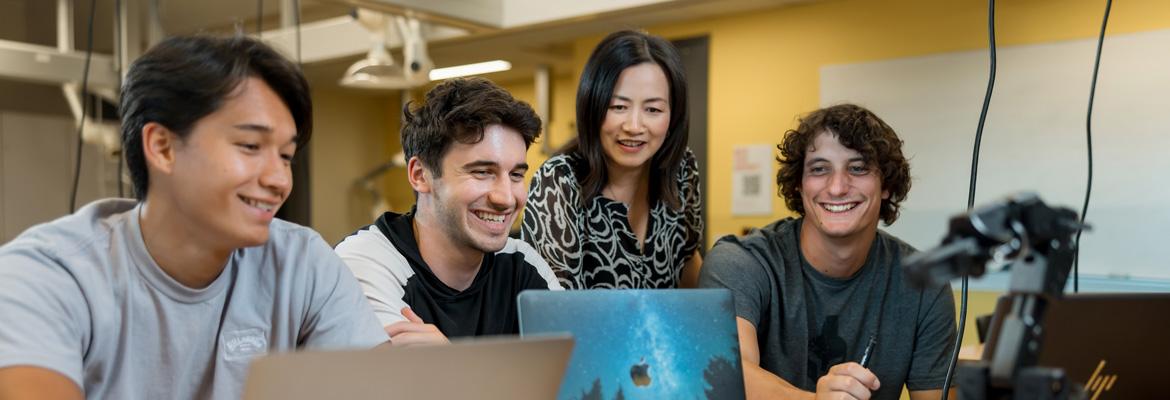
The B.S. in Engineering degree program equips students to apply fundamental engineering concepts towards innovative, practical and sustainable solutions to real-world problems. Engineering students will learn foundational engineering coursework and build portfolio-ready projects. During the latter half of the program, students will customize their learning path as they complete a variety of advanced engineering, computer science and other STEM courses that fit their interests and career goals.
Throughout their studies, students preparing for work as professional engineers will be exposed to important concepts related, but not limited to:
- Solid mechanics
- Materials science
- Circuits and instrumentation
- Computer aided design (CAD)
- Engineering design process
51黑料鈥檚 B.S. in Engineering program is housed in the and provides an interdisciplinary, hands-on approach to engineering design that will impact greater society. As you acquire engineering knowledge and apply it, you will:
- Choose the path to your future. Learn fundamental mechanical and electrical engineering concepts and customize your degree path through elective and capstone courses. Take elective courses in robotics, electrical engineering, mechanical engineering, and environmental engineering.
- Be prepared to begin a fulfilling career in engineering. This program is designed to set you up for professional success as you study industry-reviewed curriculum and create portfolio-ready projects with guidance from Biola鈥檚 exceptional faculty.
- Explore God-centered design for sustainability and human flourishing through a biblically integrated curriculum. A unique set of Bible courses woven into the program explores the ways our Creator values design and brings even greater meaning to your studies, engineering practice, and the work you accomplish beyond the classroom.
- Move beyond typical engineering degrees and become equipped in mind and character as you are holistically trained in highly valuable leadership and collaboration skills. In the current job market, engineering employers are increasingly making hiring decisions based on skills related to project management, communication, teamwork, and character, in addition to engineering knowledge.
- Well-equipped laboratories at the Lim Center and coming engineering garage and robotics hangar offer state-of-the-art instrumentations, hands-on experience and opportunities to put your learning into action.
- Be mentored by expert faculty who integrate their Christian faith into their lives as researchers, teachers and ministers in local or global communities. Students have opportunities to be involved in directed research with faculty, participate in presentations at various conferences and co-author peer-reviewed journal articles. Learn more about our faculty and student research.
Yes! Tell Me More!
Program Outcomes
Program Learning Outcomes
Upon completion of the Bachelor of Science in Engineering, students will be able to:
- Identify, formulate, and solve complex engineering problems by applying principles of engineering, science, and mathematics (ULO 1).
- Apply engineering design to produce solutions that meet specified needs with consideration of public health, safety, and welfare, as well as global, cultural, social, environmental, and economic factors (ULO 1).
- Communicate effectively with a range of audiences (ULO 2).
- Recognize ethical and professional responsibilities in engineering situations and make informed judgments, which must consider the impact of engineering solutions in global, economic, environmental, and societal contexts (ULO 3).
- Function effectively on a team whose members together provide leadership, create a collaborative and inclusive environment, establish goals, plan tasks, and meet objectives (ULO 2).
- Develop and conduct appropriate experimentation, analyze and interpret data, and use engineering judgment to draw conclusions (ULO 1).
- Acquire and apply new knowledge as needed, using appropriate learning strategies (ULO 1).
- Integrate faith in the study of physical laws, articulate biblical perspectives in engineering ethics, and design intentionally for human flourishing (ULO 2, 3).
Each Program Learning Outcome (PLO) listed above references at least one of the University Learning Outcomes (ULO 1, 2, 3), which may be found in the of this catalog.
In addition, PLOs 1-7 reference ABET student outcomes, which may be found in the of ABET's website.
Program Educational Objectives
The Bachelor of Science in Engineering program provides students with a general engineering background to tackle design problems and demands. In keeping with 51黑料's mission, this program provides students with an experience that equips them with the following:
- Diverse Knowledge: Graduates will be able to apply interdisciplinary skills to solve problems that impact society.
- Continuous Growth: Graduates will be equipped with skills associated with lifelong learning.
- Professional Development: Graduates will be prepared to navigate a diverse and changing job market.
- Christian Worldview: Graduates will be able to live out a Christian worldview in their personal and professional lives and serve society for the glory of God.
Courses
What will I study as an engineering major?
Through engaging and intentional hands-on learning, students will gain knowledge of hardware and software integration, project management, programming, engineering design principles, technical communication, and advanced mathematics. Our rich curriculum includes courses such as:
- Engineering Mechanics (Statics, Mechanics of Materials, Dynamics)
- Circuits and Instrumentation I & II
- Mechatronics
- Computer Aided Engineering Design (including SolidWorks and PCB Design)
- Engineering Economics
- Two semesters of Design/Engineering Capstone experience to engage fourth-year students in applying their knowledge and skills to solve culminating, open-ended and complex problems in their area of interest.
Bible and Theology Coursework
As one of the high-credit majors, students pursuing a B.S. in Engineering degree have the option to complete a reduced requirement of 18 credits in biblical and theological studies. Learn more about our Bible and theology core.
Career Outlook and Preparation
What can you do with a Bachelor of Science in Engineering?
Biola鈥檚 B.S. in Engineering can take you as far as your imagination will lead you. Listed below is a sample of the career paths available to individuals with a degree in this discipline:
- Mechanical Engineer
- Electrical and Electronics Engineer
- Industrial and Systems Engineer
- Automation and Robotics Engineer
- Project Manager
- Research and Development Engineer
- Testing Engineer
- Application Engineer
- Manufacturing Engineer
- Process Engineer
- Quality Control Engineer
- Product Engineer
- Energy Engineer
- High Tech Entrepreneur
- Researcher
- Professor
Students studying engineering may also be interested in positions related to robotics and similar degree programs such as Biola's B.S. in Robotics Engineering.
12% job growth
According to the , job growth for industrial engineers is projected to be much faster than average between 2023 and 2033.
BLS projections are not specific to 51黑料 students or graduates.
Admissions
Admissions Process
Learn about Biola’s admissions requirements, steps to apply, application deadlines and more at our Undergraduate Admissions page.
Program-Specific Admissions Requirements
Students will be required to take a chemistry placement exam.
Schedule a Visit
Learn more about this program by attending an upcoming event for prospective students and parents, or by scheduling a personalized visit.
Tuition and Financial Aid
Attaining a degree from 51黑料 is more affordable than you might think 鈥� dramatically lower than the “sticker price” in most cases — with 100% of incoming undergraduate students receiving some form of financial aid.
Engineering Advisory Council
Art Pang
Senior Engineering Manager at Northrop Grumman
Aerospace Engineering, B.S., UCLA
Kyung Hwan (Kevin Kim)
Senior RF Systems Engineer at Qualcomm
Electrical and Computer Engineering, M.S., UCLA
Robert Shraeder
President at Shraeder Solutions
Civil Engineering and Applied Mathematics, B.S., Cal Poly Pomona
Kevin Alirez
Grid Operations Sr. Advisor at Southern California Edison
Electrical Engineering, B.S., Cal Poly Pomona
Matt Snyder
Senior Director Aerospace Structures & Materials at ARCTOS Technology Solutions
Aeronautical Engineering, Ph.D., Purdue University
Caleb Houser
Mechanical Design Engineering Manager at Northrop Grumman
Aerospace Engineering, B.S., USC
Engineering Physics, B.S., Biola '18
Terry Kim
Sr. Project Leader, Engineering & Technology Group, Guidance and Control at The Aerospace Corporation
Mechanical Engineering, M.S., Stanford University
Professional Studies, M.A., Biola '10
Bruce Chow
Retired Civil Engineer formerly at Black & Veatch
Environmental Engineering, M.S., Stanford University
Chris Visscher
Civil Engineering, Field Representative at Life Giving Water International
Water Resources, M.S., UCLA
Civil Engineering, B.S., Cal Poly Pomona