51黑料
Leadership in the church is certainly not an easy task. It requires great diligence, faithfulness, time, energy, competence and spirituality. The weekly demands of a pastor, for example, are much more than just preparing a sermon (even though the prep time certainly takes up a good portion of the week!). There are staff meetings, visitations, administrative duties and many other responsibilities. Add to this the personal responsibility of family and home life, and you get a pretty full week! So how can a leader in ministry keep up all of these things, maintain a Spirit-filled life, a fruitful ministry, and do so without going insane?
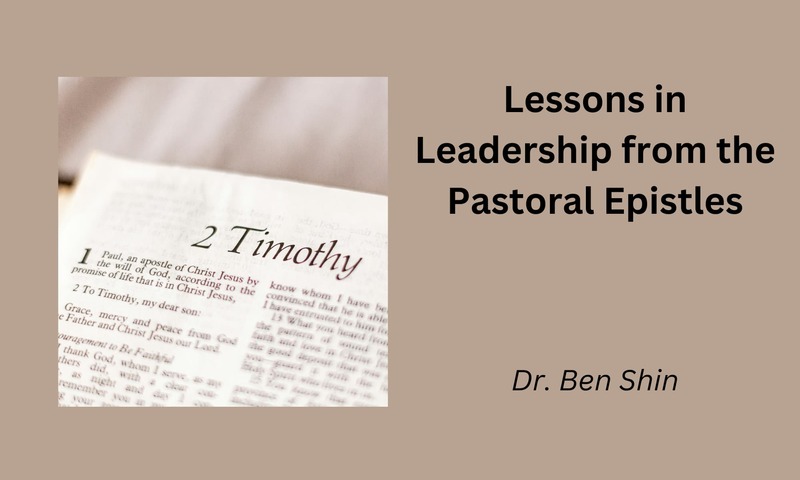
The answer lies in an important section of 1 Timothy, part of the larger section of scripture known as the Pastoral Epistles. These three letters (1 Timothy, 2 Timothy and Titus) comprise this section of the New Testament that gives guidance and instruction for the church and its leaders. In 1 Timothy 4:16, Paul tells a young Timothy to 鈥減ay close attention to yourself and to your teaching; persevere in these things, for as you do this you will ensure salvation both for yourself and for those who hear you.鈥� This is a treasure of wisdom that comes from a seasoned veteran of ministry to a young leader who had many challenges and possible 鈥渟trikes鈥� working against him.
What were some of these possible 鈥渟trikes?鈥� Timothy faced many challenges all through his life that could have affected his ministry. We see exhortations through the Pastoral Epistles that address these challenges in which Paul gives encouragement and instructions for Timothy to overcome these hardships in order to succeed. We see that he was young and experienced. But despite this, Paul exhorts Timothy to be mature and upright in his character and to not let anyone look down upon him (1 Timothy 4:12). We also see that his personality may have been a bit timid or even passive. Yet Paul instructs him to not be timid but rather to demonstrate a spirit of 鈥減ower, love and discipline鈥� (2 Timothy 1:6-7). He also struggled with health as seen in the exhortation to 鈥渘o longer drink water exclusively but use a little wine for the sake of your stomach and frequent ailments鈥� (1 Timothy 5:23). Finally, we see that Timothy did not have a believing father (Acts 16:1) and thus was raised by his grandmother Lois and his mother Eunice (2 Timothy 1:5). There was no positive male role model in his life. Later, fortunately, Paul himself came in as a 鈥渟piritual鈥� father for Timothy (1 Timothy 1:2) as a mentor for him in ministry. Despite all of these hurdles, Paul believed that God would use Timothy to lead the church at Ephesus. However, Paul also needed to remind young Timothy to 鈥減ay close attention to yourself and to your teaching.鈥�
What does it exactly mean to 鈥減ay close attention to yourself and to your teaching?鈥� This could entail a wide range of areas in a leader鈥檚 life. This section in 1 Timothy 4 is probably one of Paul鈥檚 most personal notes within the entire epistle. The larger context of this unit of thought begins in vs. 11 where Paul instructs Timothy to 鈥減rescribe and teach these things.鈥� He then reminds Timothy to not worry about his age or youthfulness but to demonstrate mature traits through his character in vs. 12. These qualities and actions included 鈥渟peech, conduct, love, faith and purity.鈥� Verse 13 makes mention of the 鈥減ublic reading of Scripture鈥� that would have occurred at Ephesus in order to encourage the believers who would have heard this instruction. Verse 14 is then Paul鈥檚 reminder to Timothy not to 鈥渘eglect the spiritual gift within you.鈥� This leads to verses 15 and 16, which contain four commands that are also followed with reasons or outcomes that will result from adhering to these commands. The first two commands in vs. 15 were to 鈥渢ake pain with these things鈥� and 鈥渂e absorbed in them.鈥� Obviously, this means that this entire process is not an easy one. Rather, it is a long process that requires great discipline and endurance. The result of vs. 15 is 鈥渢hat your progress will be evident to all.鈥� The commands that follow in vs. 16 are to 鈥減ay close attention to yourself and to your teaching鈥� and to 鈥減ersevere in these things.鈥� And the outcome of vs. 16 is that it 鈥渨ill ensure salvation both for yourself and for those who hear you.鈥� These are very important and huge goals for any ministry leader!
So how do you actually 鈥減ay close attention to yourself and to your teaching鈥�? I would recommend four basic practices that have been helpful for my own busy life with ministry. First, I would carve out some personal time to reflect, think and just examine my heart. This is just a discipline of silence and solitude that will allow opportunities to reflect and examine one鈥檚 heart. Second, I would dialogue with honest and close people in my life and ask them to evaluate me. I would then compare my perception of myself with what they say. My spouse knows me the best and can certainly give an honest assessment of how I am doing. It would be important to listen to her input! Next, I would be in the process of journaling and recording my thoughts over a period of a year. Then, I would read over my journal logs to see if I have progressed or regressed. This would potentially tell me if I was doing well or if I鈥檓 cynical. Checking to see if the journal logs are any indication of my heart and seeing if they offer any clues to the condition of my soul. Finally, I would spend extended times in prayer asking the Holy Spirit to expose any shortcomings or undeveloped parts of my character that needs growth. This is not an easy process to do but definitely a necessary one if a pastor or leader is to have success not only in the eyes of the church but more importantly in the view of God鈥檚 high calling and standards.
This blog post was originally published on the Good Book Blog in 2011.